In my last post, I couldn’t come up with a good Western metaphor for writing a novel, falling back on a marathon comparison (like a coward). By the time the weekend arrived, I still had no metaphor. I fired up the OG Western video game: The Oregon Trail. Kaitlyn’s sister and brother-in-law came over (let’s call them Ezekiel and Jebediah after the names of their trail characters; we will call Kaitlyn… Kaitlyn) and we created a wagon party.
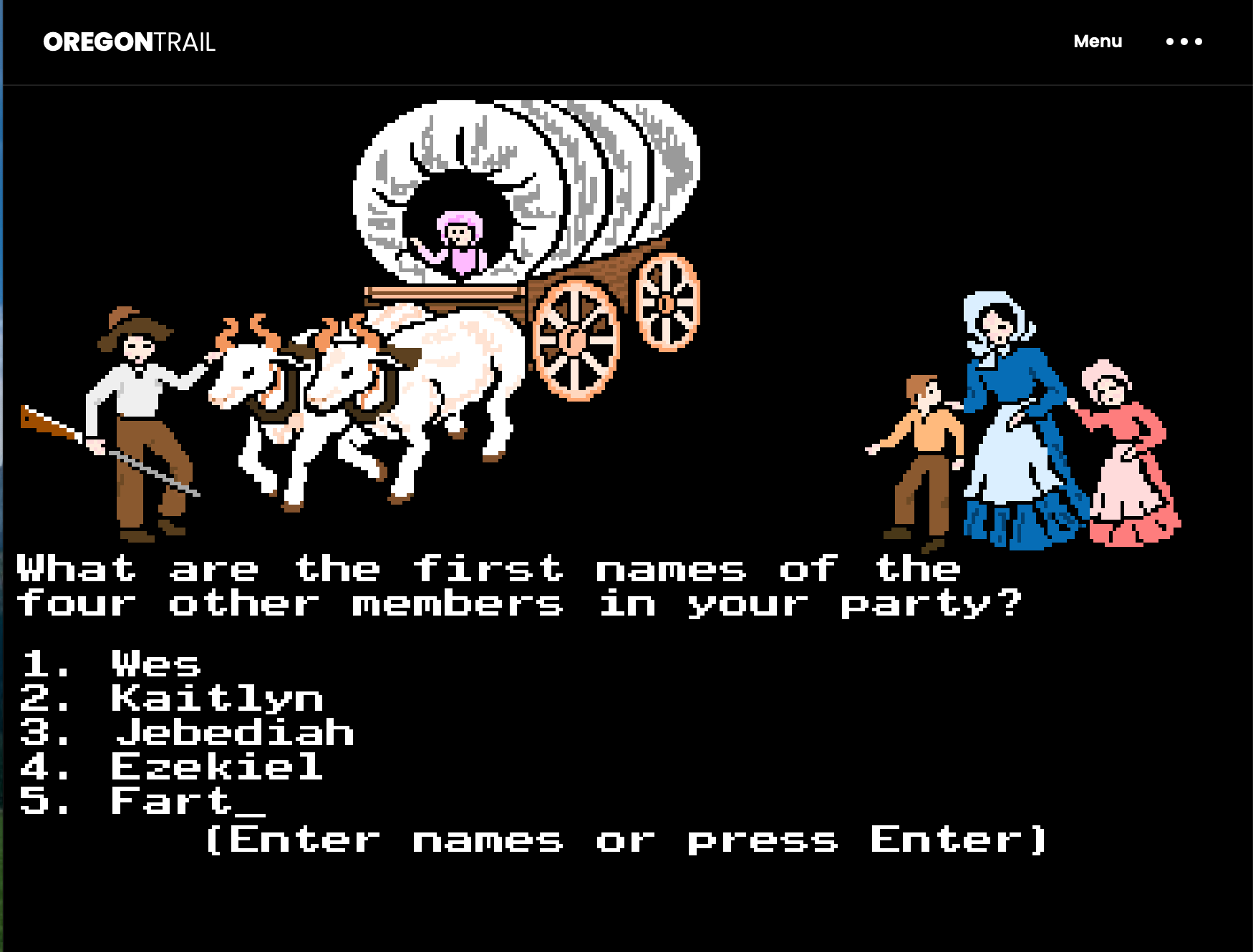
We bought the most expensive wagon and enough supplies to get us over the Rocky Mountains.
Within minutes of starting on the trail, we realized we actually didn’t have any supplies at all. No food. No clothing. No medicine. Our trail party would surely be doomed halfway across Kansas if we kept going.
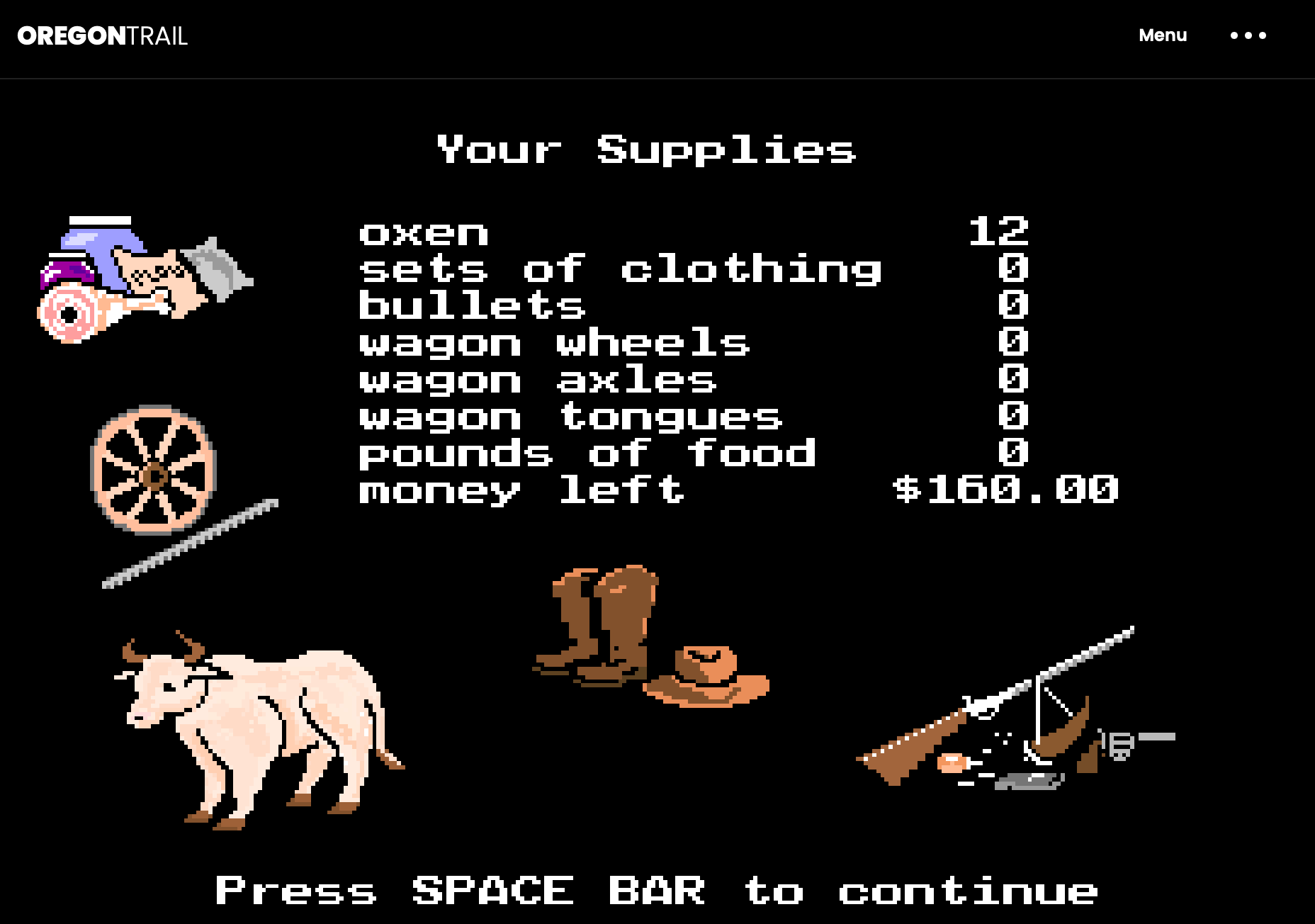
“Good thing we got that expensive wagon! We’re not house-poor, we’re wagon-poor!” – Ezekiel, through tears
We tried to turn around. But anyone who’s ever played Oregon Trail in their elementary school’s computer lab knows that you can’t turn back. Even if you just left Independence, Missouri a few minutes ago!
At that moment, I finally found the metaphor I was searching for. Writing a novel is like traveling the Oregon Trail without any supplies.
If you’re not familiar with Oregon Trail, I’m deeply sorry. You missed out on a fundamental childhood memory. Contact your local representative and ask why elementary and middle schools in your hometown didn’t include the game in computer class.
The game is an institution that goes far beyond Millennial children playing it in grade school. The franchise holds the record for the longest running video game series. The series started in 1971, making this year the series’ 55th birthday.
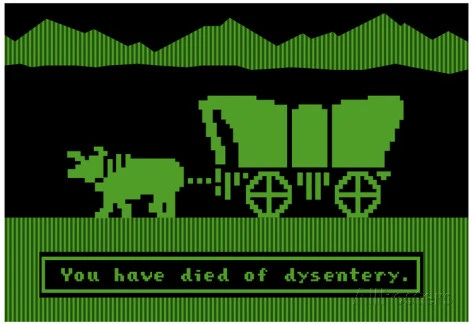
The game has also been immortalized in pop culture thanks to the ‘died of dysentery’ meme:
But what’s it all got to do with writing a novel? Writing the first draft of a novel is like playing The Oregon Trail without supplies. First drafts are meant to be written without revision or rewrites. Like the first pancake, it doesn’t always come out perfect, but that’s not the point. You just need to get the story down on paper. Even if you start to doubt what you’ve written thus far – or where your story is headed – keep plowing ahead. Otherwise, you might never progress past the first act of a story. Take it from Stephen King:
“I believe the first draft of a book — even a long one — should take no more than three months… Any longer and — for me, at least — the story begins to take on an odd foreign feel.” — Stephen King
Not all of us have an endless supply of cocaine, Steve!
Famously, the real-life Oregon Trail also has a time limit. Leave in spring and get across the Rocky Mountains by mid-summer, or wind up cannibalizing your family in the Sierra Nevada mountains by winter. In other words, keep moving forward.
Let’s return to the desperation of our most recent playthrough. We named our party the Donner Party 2.0 and stumbled across Missouri, pondering the desolation ahead of us. Each river we forded seemed like a point of no return.
Novels are like that too, especially the first draft. Reach a turning point. Make a decision. Wait for the current to calm down or just float the wagon across the river. Don’t look back.
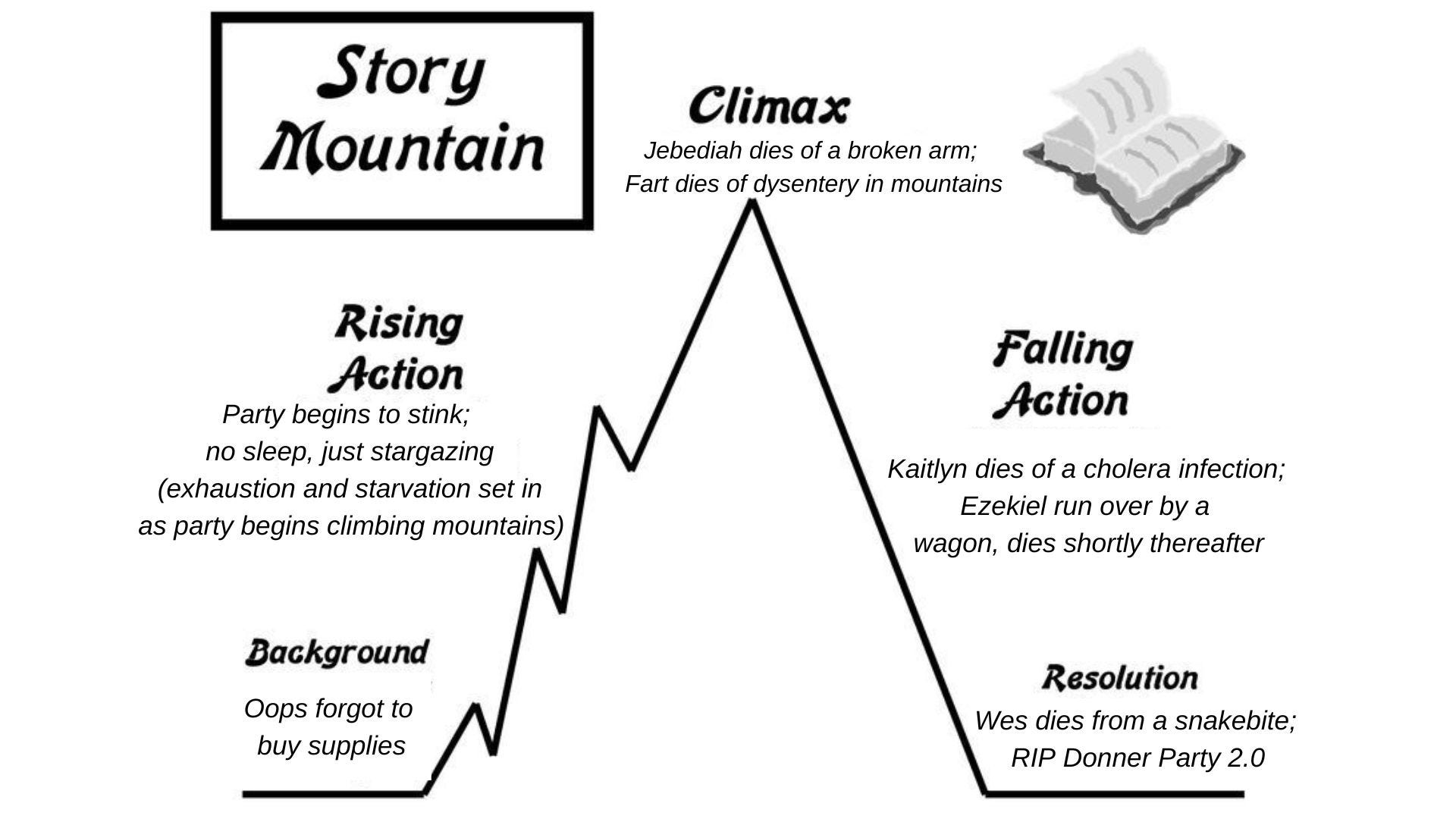
In Kansas, certain members of the wagon party began to stink because we had no clothes to change into. Of course, everybody stank in the Old West. But this was particularly bad. Jebediah’s hygiene plummeted. But we pressed on, stinking up the prairie.
While writing my novel over the last two years, I had the luxury to change my clothes once or twice. But if the writing stinks, you can’t force your characters to take a shower.
More importantly, a first draft should have a healthy dose of blood, sweat, and tears. It should reek of the months – or even years – spent on the dusty ol’ trail, writing your draft. It shouldn’t be polished. I don’t trust a polished first draft. And it certainly shouldn’t be something you can plug into an AI tool for a robot to write for you. That’s like buying a private jet instead of a wagon and flying straight to Oregon. Not only is it cheating, it’s terrible for the environment.
Things got worse in Wyoming, approaching the mountains. We steadily ran out of food. Worse, we ran out of ammunition to hunt for food. Without money, we grew desperate. The mountains loomed ahead, the “make or break” point for most westward wagon journeys. You might call it the “rising action” and the “climax” of the writing process.
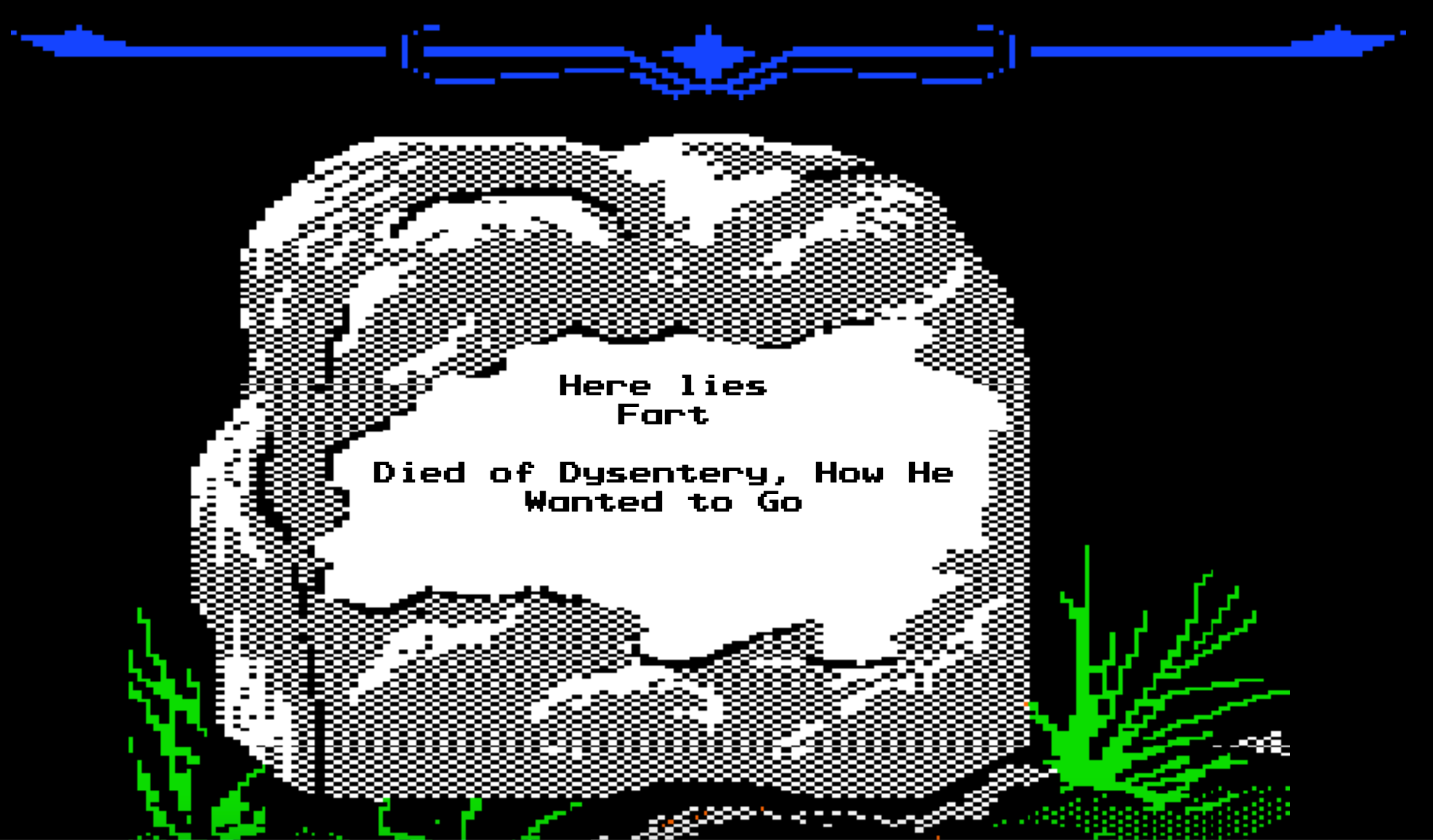
The stakes were high for us. Jebediah had a broken arm and dysentery. We reached Fort Laramie with just $7 to our name. Not a pound of food in the wagon. We were only a few miles from Fort Bridger when Fart got dysentery (ironic), and Jebediah died of his broken arm (the 1800s sucked).
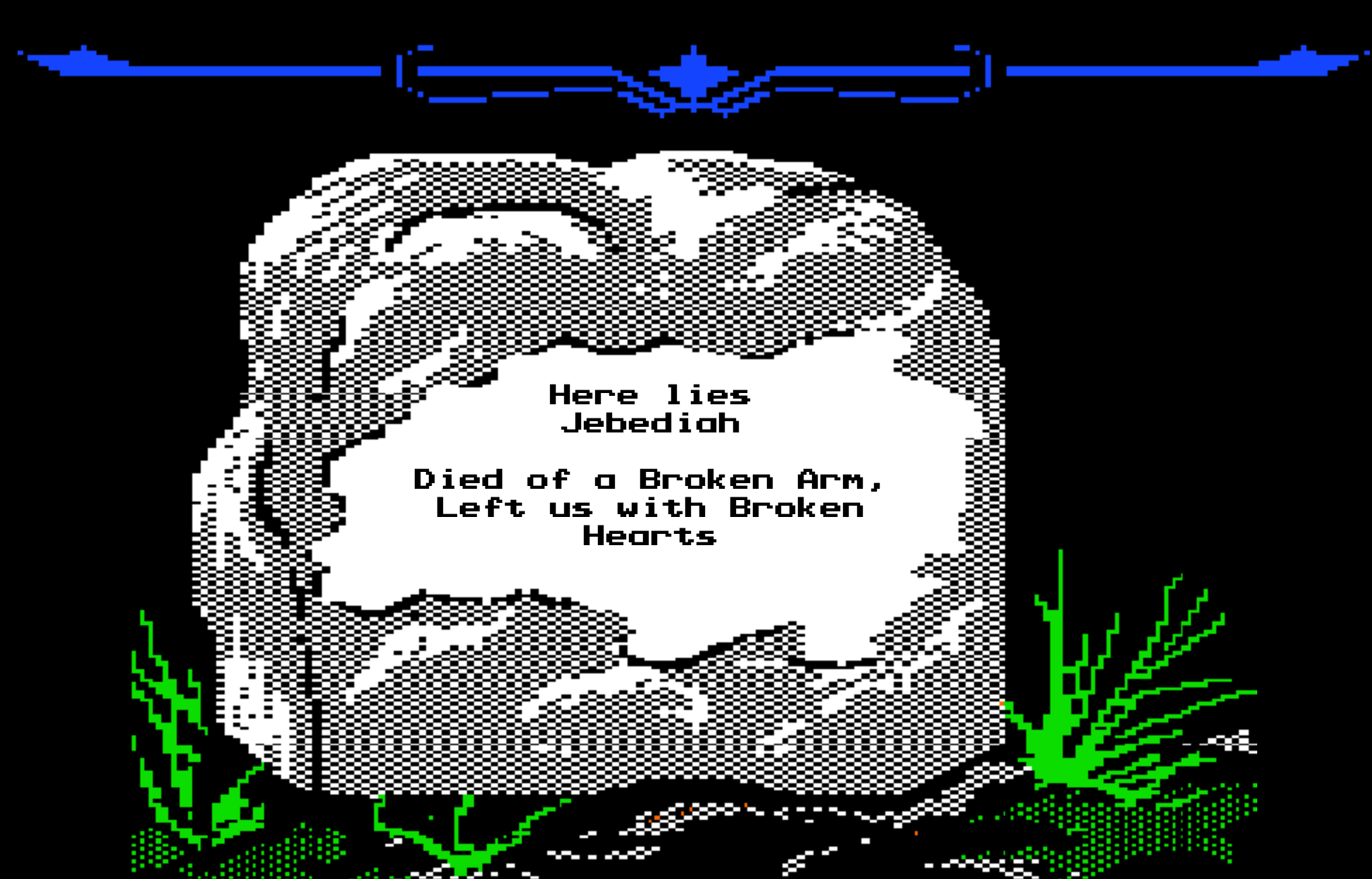
Writing is a cruel process. Sometimes you have to kill your darlings. Fart died of dysentery before we could cross into Idaho. Don’t cry for Fart, though. It’s how he would have wanted to go.
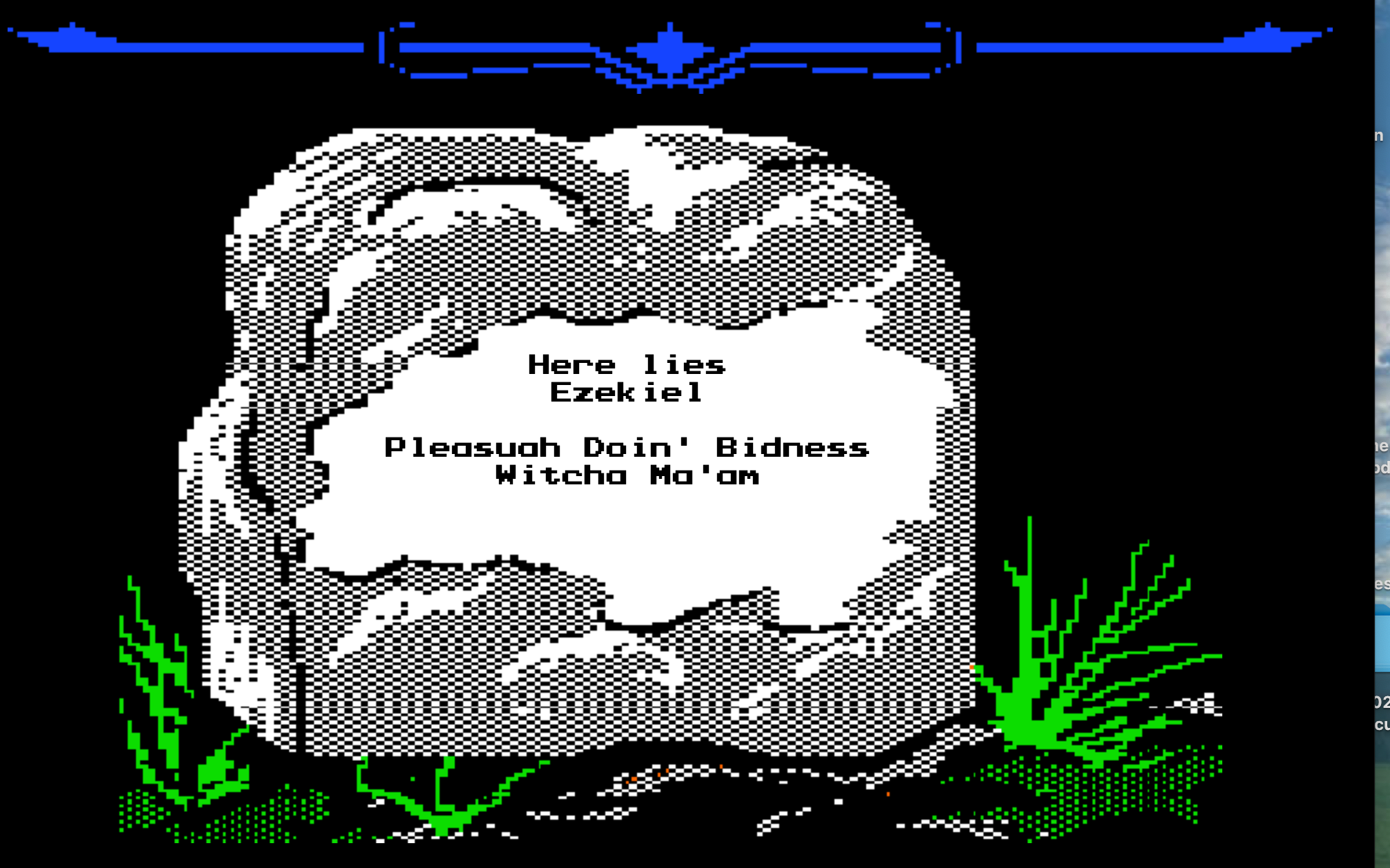
By the time we reached Fort Hall, tragedy struck again. Ezekiel was run over by our wagon. She perished shortly thereafter. Her final words? “Pleasure doin’ business with ya, ma’am.”
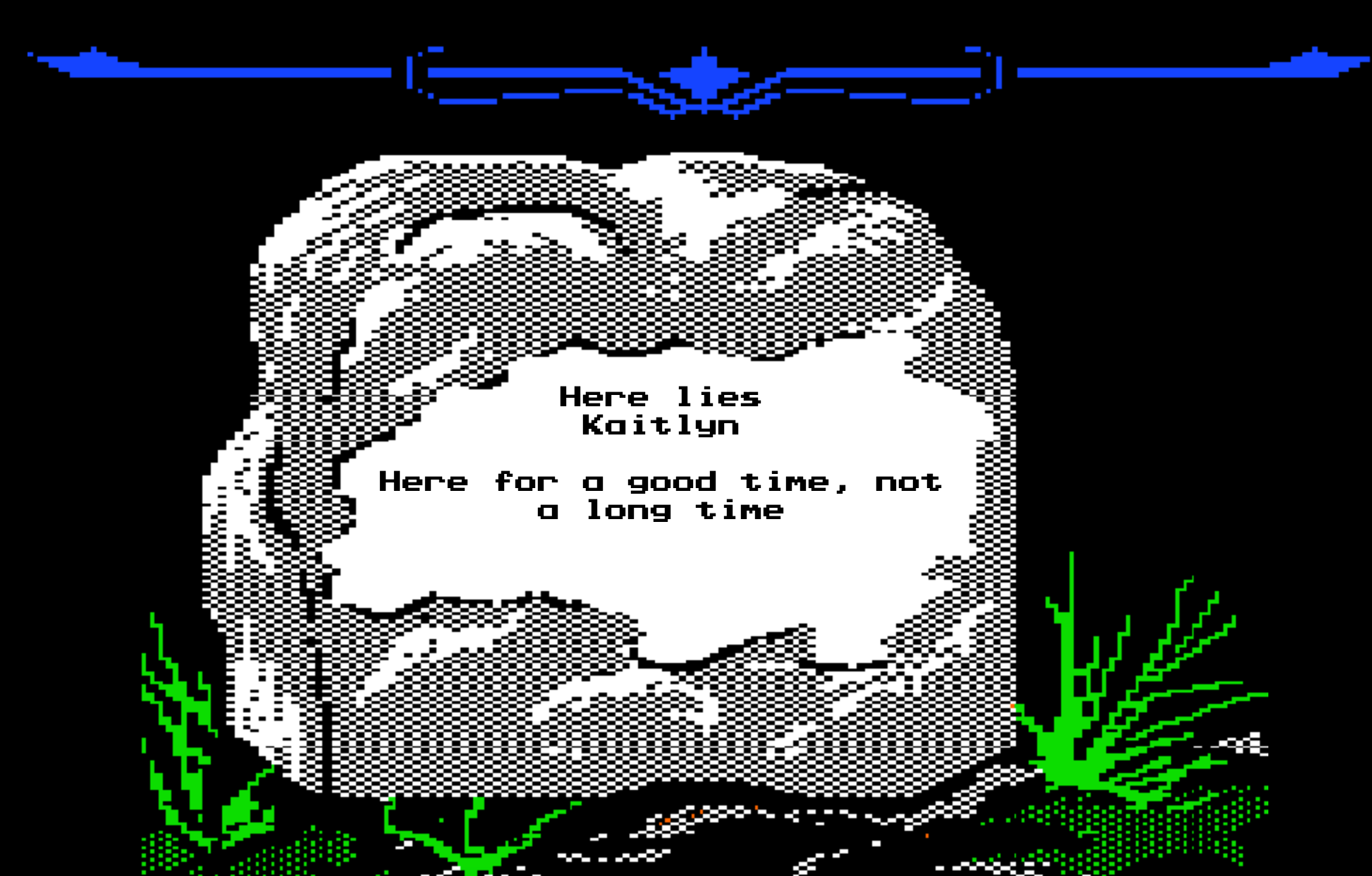
Suddenly it was just Kaitlyn and me left on the trail. Then Kaitlyn died of cholera as we approached Fort Boise (Love in the Time of Cholera is one of her favorite books, so this is okay).
Worse, I was snakebit. Starving and without medicine, I was a goner. Only a few miles from the Idaho border, I perished.
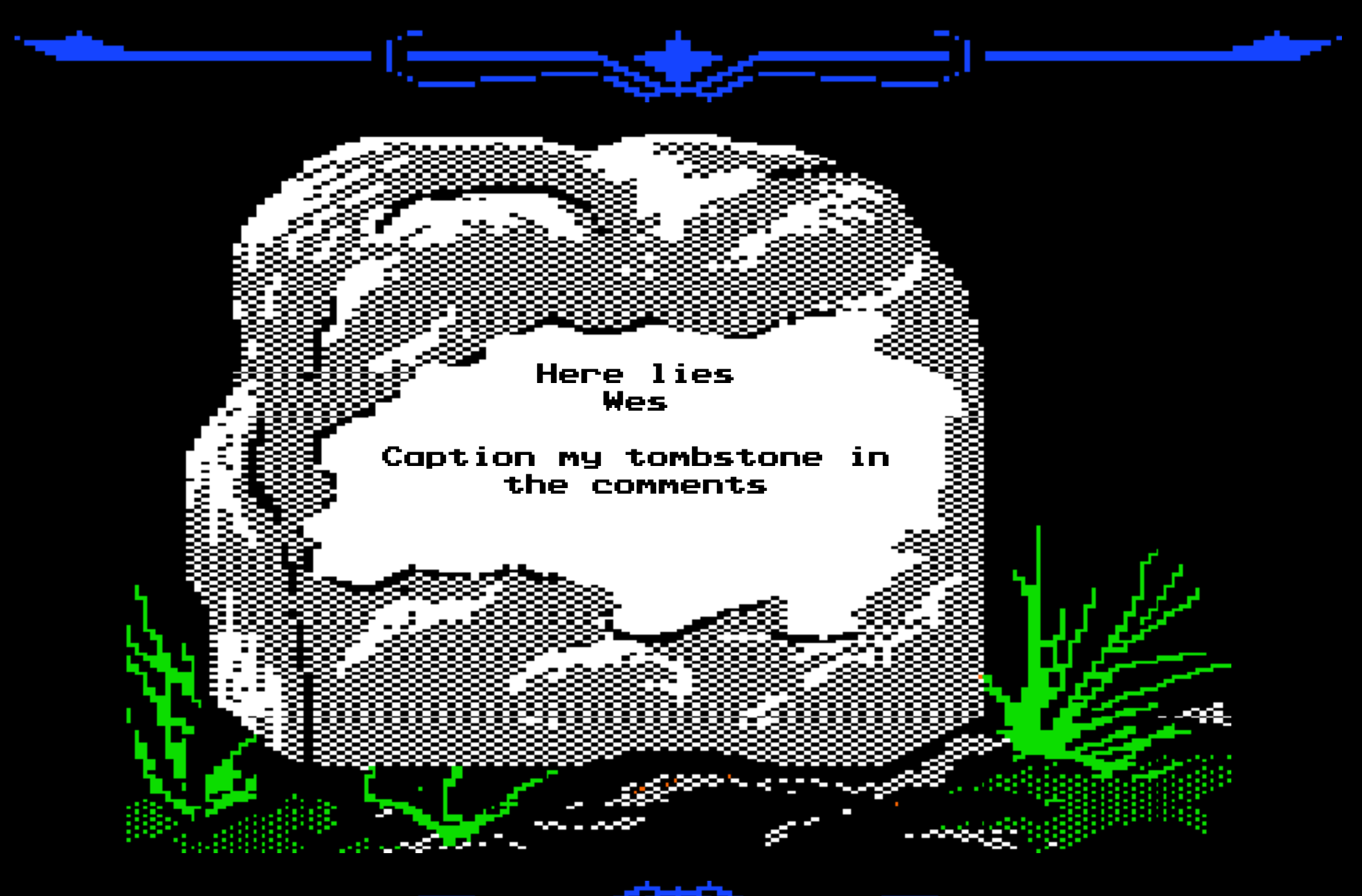
The Donner Party 2.0 had reached its final resting place.
I sat with the heartbreaking end of our journey for a long while. Wondering about the point of this cruel life. I’ve had a few manuscripts go the way of the Donner Party 2.0, abandoned in the mountains, plagued by rattlesnakes and cholera. Especially as I plan to start a new manuscript soon, this was hard to swallow.
Then it hit me. For all the similarities between writing a first draft and playing The Oregon Trail, there’s a key difference. First drafts are forgiving. You can take risks and revise later. You can allow yourself time to stargaze while camped out on the plains, even if it means you miss a night’s sleep. You’ll thank yourself later. If you make mistakes, you can save them for a future version of yourself to puzzle over (you’ll hate yourself for it, but that’s a problem for future you). You can make it a lot further than Kansas, even without supplies. It’s a good life lesson.
The next time you want to start an ambitious project, think of us leaving Independence, Missouri without supplies. If we can almost make it to Oregon, so can you.
 wesdpeters